

Learning how to combine two columns in Excel is an essential skill for anyone who works with data regularly. Excel is widely used for organizing information such as names, addresses, product lists, and financial records, and very often this data is split into multiple columns. Knowing how to combine two columns in Excel allows you to merge this information into a single, clean format that is easier to read, analyze, and present. Whether you are a student, office worker, or business professional, understanding how to combine two columns in Excel can significantly improve your productivity and reduce manual effort when handling spreadsheets.
In many real-life situations, data is not always stored in the most convenient way. For example, first names and last names are often separated, or street addresses and city names are placed in different columns. This is where how to combine two columns in Excel becomes extremely useful. Instead of manually typing everything again, Excel provides multiple built-in methods that make this task fast and efficient.
Table of Contents
ToggleUsing Excel Formulas to Combine Columns
One of the most common ways to learn how to combine two columns in Excel is by using formulas. Excel provides several functions that allow you to merge text from different cells into a single cell. The most basic approach is using simple text formulas that reference both columns and join their values together. This method is widely used because it is flexible and works well in almost all versions of Excel.
When using formulas for how to combine two columns in Excel, users can also control how the data appears in the final result. For example, you can add spaces, commas, hyphens, or any other separator between the combined values. This makes the final output more readable and professional. Formulas are especially useful when working with large datasets because once you apply the formula to one row, you can quickly copy it to all remaining rows.
Combining Columns with the Ampersand Method
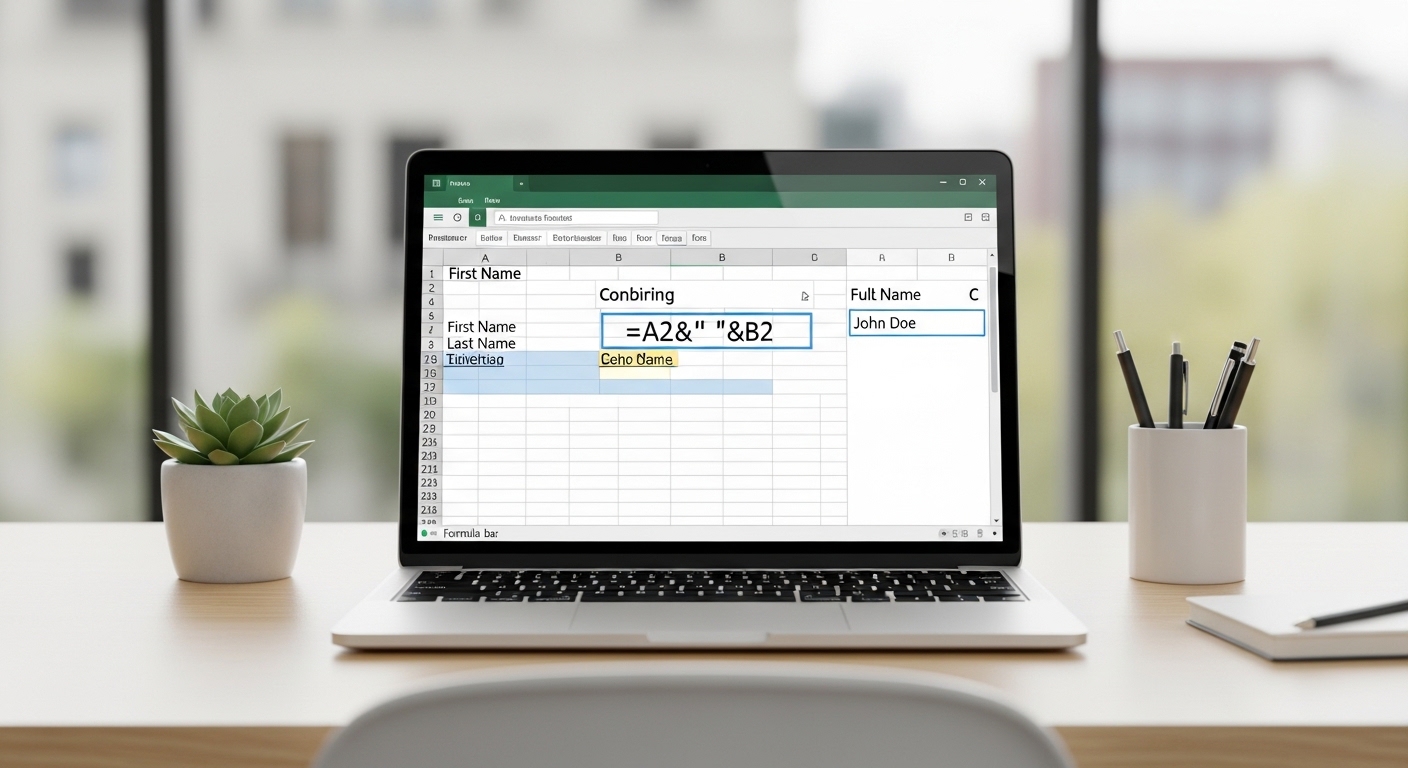
Another very simple and popular approach for how to combine two columns in Excel is using the ampersand symbol (&). This method does not require advanced functions and is easy for beginners to understand. The ampersand acts as a connector that joins the content of two or more cells into one continuous string.
This method is especially helpful when you want a quick solution for how to combine two columns in Excel without using complex functions. You can also customize the output by inserting spaces or punctuation inside quotation marks. Because of its simplicity, many users prefer this technique when working on small to medium-sized datasets where speed and convenience matter more than advanced features.
Using CONCAT and TEXTJOIN Functions
For more advanced users, Excel offers functions like CONCAT and TEXTJOIN, which are powerful tools for how to combine two columns in Excel. The CONCAT function is used to merge values from multiple cells, replacing older functions that were more limited. It is efficient and works well when combining structured data.
On the other hand, TEXTJOIN provides even more flexibility for how to combine two columns in Excel because it allows you to define a delimiter such as a space, comma, or dash, and it can also ignore empty cells. This is especially useful when working with incomplete datasets where some values might be missing. These functions are ideal for users who regularly handle large or complex spreadsheets and need a reliable way to manage data efficiently.
Using Flash Fill for Quick Results
Flash Fill is one of the smartest features in Excel and provides a very fast way to learn how to combine two columns in Excel without writing any formulas. It works by detecting patterns in your data. When you manually type the combined result for a few rows, Excel automatically recognizes the pattern and fills the remaining rows for you.
This method is extremely useful for beginners or users who need quick results without dealing with formulas. Flash Fill is especially effective when the data follows a consistent structure. However, it may not always work perfectly in complex datasets, so understanding other methods for how to combine two columns in Excel is still important.
Power Query for Advanced Data Combination
Power Query is a powerful tool built into Excel that allows users to transform and manage data efficiently. It is one of the most advanced methods for how to combine two columns in Excel, especially when dealing with large datasets or repeated tasks. With Power Query, you can load data, merge columns, clean information, and automate the entire process.
Unlike basic formulas, Power Query saves your steps so that you can repeat the same process with new data without starting from scratch. This makes it an excellent option for businesses and professionals who frequently work with structured reports. It is a more technical method, but it provides high efficiency and accuracy for how to combine two columns in Excel.
Adding Spaces and Formatting Combined Data
When learning how to combine two columns in Excel, one important step is ensuring that the final output is readable. Without proper spacing or separators, combined data can look messy and confusing. That is why users often include spaces, commas, or other symbols between values when merging columns.
Proper formatting improves clarity and makes the data more professional. After combining columns, you may also want to adjust font styles, alignment, or column width to enhance presentation. These small adjustments make a big difference in how the final spreadsheet looks and ensure that your work appears clean and organized.
Handling Numbers and Text Properly
In many cases, how to combine two columns in Excel involves working with both numbers and text. This can sometimes cause formatting issues because Excel treats numbers differently from text. To avoid problems, it is important to convert numbers into text format before combining them.
This ensures that the final result is consistent and prevents unexpected errors. Proper handling of data types is a key part of mastering how to combine two columns in Excel, especially when working with financial or statistical data where accuracy is very important.
Common Mistakes to Avoid
While learning how to combine two columns in Excel, many users make simple mistakes that can lead to incorrect results. One common mistake is forgetting to add separators, which makes the combined data difficult to read. Another mistake is using incorrect cell references, which can produce wrong outputs.
Some users also overwrite original data instead of creating a new column, which can lead to data loss. To avoid these issues, it is always recommended to work on a separate column when practicing how to combine two columns in Excel. Careful attention to detail ensures better accuracy and prevents unnecessary errors.
Real Life Applications
There are many practical uses for how to combine two columns in Excel in everyday work. Businesses often combine customer names, addresses, or product details to create organized reports. In education, teachers may combine student information for grading systems. In personal use, individuals may combine contact details or lists for better organization.
These real-world applications show why learning how to combine two columns in Excel is such a valuable skill. It simplifies data handling and makes information easier to understand and share.
Conclusion
Mastering how to combine two columns in Excel is an important skill that significantly improves your ability to manage, organize, and present data in a clean and professional way. Excel offers multiple approaches for how to combine two columns in Excel, including formulas, the ampersand operator, TEXTJOIN function, Flash Fill, and Power Query. Each method serves a different purpose depending on the size of the dataset and the level of automation required. When you fully understand how to combine two columns in Excel, you can easily transform scattered or separated data into a single structured format that is easier to read and analyze. With consistent practice, how to combine two columns in Excel becomes a natural part of your workflow, helping you save time, reduce errors, and improve overall productivity in any data related task.
FAQs
1. What is the easiest way to combine two columns in Excel?
The easiest way for how to combine two columns in Excel is using the ampersand operator or Flash Fill feature. Both options are beginner-friendly and allow you to quickly merge data without complex setup.
2. Can I combine two columns in Excel without using formulas?
Yes, you can combine two columns in Excel without formulas by using Flash Fill. It automatically detects patterns from your input and completes the remaining cells, making how to combine two columns in Excel very fast and simple.
3. How do I add a space when combining two columns in Excel?
You can add a space while learning how to combine two columns in Excel by placing a space inside quotation marks within your formula. This ensures the final result is readable and properly formatted.
4. Which method is best for large datasets?
For large datasets, Power Query is the most efficient method for how to combine two columns in Excel because it automates the process, handles large data smoothly, and allows you to repeat steps easily.
5. What should I do if my combined data looks incorrect?
If your result looks wrong while learning how to combine two columns in Excel, check your formula, ensure correct cell references, and confirm that separators like spaces or commas are included properly.