
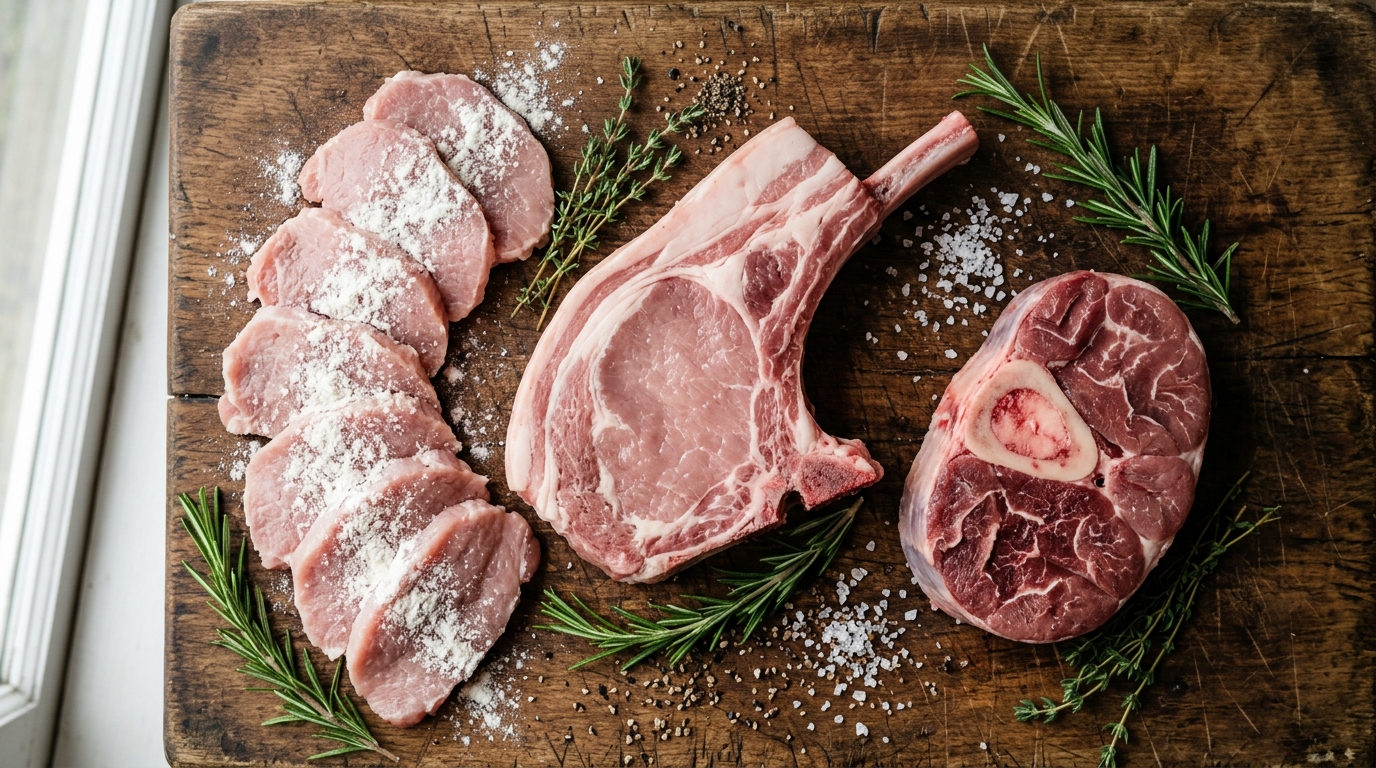
What is veal exactly, and why does it spark so much curiosity and confusion among home cooks and food lovers? You have likely spotted pale, delicate cutlets at a restaurant or glanced at vacuum-packed packages in the butcher’s case. Understanding what is veal starts with recognizing how different it looks and feels compared to regular beef.
So what is veal in simple terms? Veal is meat harvested from young calves, typically between a few weeks and six months old. Knowing what is veal helps you choose the right cut for recipes like ossobuco or scallopini. Many people ask what is veal doing on restaurant menus if it is so uncommon at home. The answer lies in its unique tenderness.
To fully grasp what is veal, you must compare it directly with beef. Unlike beef, veal comes from animals that have not yet developed tough muscle fibers. That is why what is veal often answered with one word: delicate. Once you learn what is veal, you will never confuse it with pork or chicken.
This guide answers what is veal from every angle: farming, nutrition, cooking, and ethics. By the end, you will know what is veal better than most home cooks. Let us settle the question what is veal once and for all.
Why Veal Looks Different From Regular Beef
Walk into any meat department, and you will notice veal’s pale pink to almost creamy white color. That visual difference shocks most shoppers. Beef displays a rich, dark red hue because older cattle have more myoglobin. Understanding what is veal means understanding that myoglobin levels drop dramatically in young calves.
What is veal’s color telling you? It tells you the calf lived a short, low-exercise life. The younger the calf, the paler the meat. Milk-fed veal appears the lightest. Grain-fed veal or “red veal” comes from slightly older calves, resulting in a pinker product. So what is veal’s ideal color? Fresh, high-quality veal shows a soft pink hue.
Some shoppers mistakenly think pale meat signals poor quality. But that is simply what is veal naturally looks like. What is veal without its signature color? It would not be veal at all. A fresh veal chop carries a soft pink tone and fine texture. When you compare a veal chop to a beef chop, the difference in fat distribution also matters.
Beef contains creamy white fat that streaks through the meat. Veal fat appears firmer, whiter, and mostly sits on the outside edges. That is another clue for what is veal when scanning the butcher counter. Now you know veal visually.
How Farmers Raise Veal Today
The biggest question around veal has always centered on animal welfare. Older production methods — individual crates that prevented movement have largely disappeared. So what is veal farming like today? Modern veal farming prioritizes group housing, social interaction, and specialized nutrition.
Reputable veal producers raise calves in open barns with soft bedding and fresh water. veal’s welfare standard now? Calves can lie down, groom themselves, and interact with other calves. Farmers feed calves a balanced, iron-enriched diet that supports healthy growth. That diet explains veal’s secret to staying tender: controlled nutrition.
The term “special-fed veal” means calves receive a milk replacer fortified with vitamins. veal’s alternative? “Non-special-fed veal” includes calves that spend time on pasture or eat hay and grain. These animals produce slightly darker meat. So what is veal’s most ethical choice? Look for labels like “Certified Humane” or “Global Animal Partnership.”
Many chefs now ask veal’s source before buying. If you feel concerned about ethics, only purchase certified veal. Understanding what is veal today means understanding that crate confinement is banned in many regions. That is the reality of veal in modern agriculture.
Nutritional Profile Is Veal Healthy?
What is veal’s nutritional value compared to other meats? A 3-ounce cooked serving delivers around 160–180 calories and 24–26 grams of protein. That protein punch helps build muscle and repair tissue. When people ask veal good for, protein tops the list.
Compared to beef, veal often contains less total fat and fewer saturated fats. veal’s fat content exactly? A trimmed veal cutlet has roughly 5–7 grams of total fat. The same portion of beef sirloin might have 8–10 grams. So veal’s advantage for health-conscious eaters? Lower fat without sacrificing protein.
Veal also provides high levels of B vitamins, especially B12, B6, and niacin. veal’s mineral profile like? Zinc, selenium, and phosphorus round out the benefits. However, is veal’s downside? It contains purines, which break down into uric acid. People with gout should moderate their intake.
What is veal liver like nutritionally? Exceptionally rich in iron and vitamin A, but also high in cholesterol. If you watch your cholesterol, stick with lean cuts like the leg or sirloin. Understanding veal’s full nutritional picture helps you decide how often to eat it.
The Best Cuts of Veal and How to Cook Each One

What is veal’s most popular cut for quick cooking? Veal scallopini, also called escalope. This paper-thin cut from the leg cooks in under two minutes. Knowing veal scallopini means knowing it works perfectly for pan-frying with lemon and capers.
veal chop’s best preparation? Think of it as veal’s answer to a small beef steak. Rib chops and loin chops carry a small T-shaped bone. Sear them hard in a cast-iron pan for two minutes per side. Then finish in a 400°F oven for 5–7 minutes. veal chop’s target temperature? 145°F for tender, slightly pink results.
What is veal shank famous for? Ossobuco. The shank includes a round bone with rich marrow at the center. Low-and-slow braising turns this tough cut into fall-apart meat. Brown the shanks, then simmer for two to three hours. That is what is veal shank’s magic: the marrow becomes a spreadable delicacy.
veal ground meat used for? Ground veal makes incredibly light meatballs and meatloaf. It contains less fat than ground beef, usually 10–15%. Many Italian recipes combine ground veal with pork and beef. veal’s role in that blend? It adds tenderness without heaviness.
veal breast? A large, flat cut from the front chest area. It contains layers of fat and cartilage, so braising is your best option. Stuffed veal breast is a classic Sunday supper dish. veal breast’s cooking time? Plan on three hours of slow cooking.
What is veal offal like? Veal kidneys are mild and tender compared to beef kidneys. Soak them in milk before cooking. Veal liver is far more delicate than beef liver. Sauté it quickly with onions. Knowing veal offal opens up adventurous cooking.
Where Veal Fits in World Cuisine
What is veal’s role in Italian cooking? Northern Italy claims veal as a culinary treasure. Ossobuco alla Milanese pairs braised veal shanks with saffron risotto. What is veal tonnato? Cold sliced veal with a creamy tuna-caper sauce — it sounds strange but tastes brilliant.
What is veal’s place in French cuisine? Blanquette de veau, a creamy stew where veal simmers with carrots and onions. The French also prize veal for pâtés and terrines. So veal’s appeal to French chefs? Its ability to absorb flavors without overpowering them.
veal schnitzel? In Austria and Germany, Wiener schnitzel traditionally uses thinly pounded veal. That golden, crispy cutlet remains a national icon. veal’s texture in this dish? Tender inside, shatteringly crisp outside.
veal called in Dutch cooking? Kalfsvlees. It appears in delicate ragouts and croquettes. In Spain, veal cheeks (carrillada de ternera) are slow-cooked until meltingly tender. Understanding veal globally means recognizing its irreplaceable niche. No other meat matches its mildness and richness simultaneously.
Buying and Storing Veal
What is veal supposed to look like when you buy it? Fresh veal should look moist but not wet, with a soft pink to light rose color. Avoid any veal with gray patches or browning edges.veal’s smell test? Fresh veal has almost no odor, or a very faint milky scent.
veal’s price range? Scallopini can run 18–25perpound.Chopsmayhit25–35 per pound. That premium price reflects specialized raising methods. So veal’s cost compared to beef? Significantly higher, but many cooks say it is worth it.
veal’s shelf life in the fridge? Store it in the coldest part of your refrigerator and use it within two days. veal freezing advice? Wrap it tightly in plastic wrap, then foil, then a freezer bag. Frozen veal stays good for four to six months.
Thaw it overnight in the refrigerator, never on the counter. veal’s most important cooking rule? Cook it to medium doneness (145°F internal temperature). Overcooked veal turns dry and tough. Knowing veal’s ideal doneness saves your dinner.
Common Myths About Veal Debunked
veal myth number one? That it comes from newborn calves. False. Most veal calves are between 16 and 24 weeks old at harvest. So veal’s actual age range? Several months, not days.
veal myth number two? That calves are kept in darkness. False. Light exposure does not affect meat color. The pale color comes strictly from low iron in the diet. Understanding what is veal’s color science helps you ignore old myths.
veal myth number three? That it is always cruel. While past practices were cruel, modern certification programs have transformed the industry. veal’s ethical reality today? You can buy veal from farms that meet high welfare standards. Just look for certifications.
What is veal myth number four? That you cannot eat it rare or medium-rare. You absolutely can. The USDA recommends 145°F, which yields a slightly pink center. veal’s safety profile? Because it comes from young animals, the risk is lower than with older beef.
Conclusion
You now understand exactly what is veal: a unique, tender, mild-flavored meat from young calves. You know what is veal’s visual signature, its nutritional profile, and its best cooking methods. You can answer anyone who asks veal with confidence.
Start with a simple recipe. Buy veal scallopini, season it, dredge it lightly in flour, and sauté it in butter for just sixty seconds per side. Squeeze fresh lemon juice over the top. That single dish will show you why chefs love veal. Now that you know veal, go cook something beautiful.
FAQs
1. What is veal compared to beef?
What is veal’s main difference from beef? Veal comes from young calves under six months old, while beef comes from cattle over one year old. Veal has a paler color, milder flavor, and more tender texture. Knowing what is veal helps you choose the right meat for delicate dishes.
2. Why do some people refuse to eat veal?
What is veal’s historical reputation? Many people avoid veal due to past farming practices that confined calves in small crates. Those methods caused animal suffering. However, crate confinement is now banned in many places. Understanding what is veal today means knowing the industry has changed.
3. Can you substitute veal with something else?
What is veal’s best substitute? For scallopini, use chicken breast pounded thin. For braised dishes, use pork shanks. No substitute perfectly mimics veal’s tenderness, but these swaps work acceptably. So what is veal’s unique trait? That delicate texture no other meat fully replicates.
4. Is veal healthier than beef?
What is veal’s health advantage? It typically contains fewer calories and less fat than beef. However, beef has more iron and zinc. What is veal better for? Lower fat and high protein. What is beef better for? Higher mineral content. Your choice depends on your needs.
5. How can I find humanely raised veal?
What is veal’s best certification? Look for Certified Humane, Global Animal Partnership, or Animal Welfare Approved. Ask your butcher directly about the farm source. Knowing what is veal’s ethical labeling helps you shop responsibly.
6. Does veal taste gamey or metallic?
No. What is veal’s actual flavor? Clean, mild, and slightly sweet. Any metallic or ammonia-like smell indicates spoilage. Understanding what is veal’s fresh flavor helps you identify bad meat quickly.