
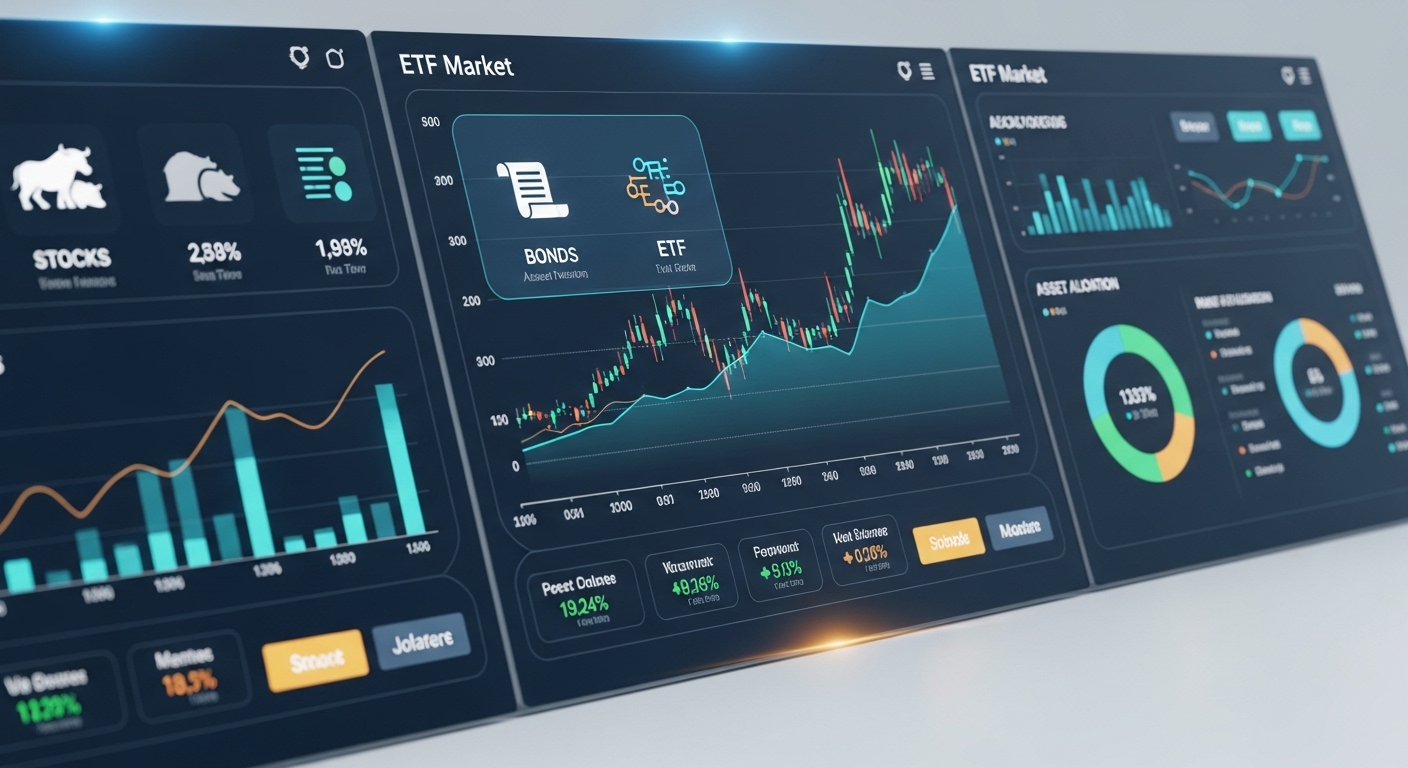
The fintechzoom.com etf market provides an in-depth look into how exchange-traded funds (ETFs) are transforming investing globally. ETFs have become a central part of modern portfolios, giving investors flexibility, diversification, and cost-effective exposure to different asset classes. In this article, we will explore ETFs, their benefits, risks, strategies, and how investors can leverage the fintechzoom.com etf market insights for smarter financial decisions.
What is an ETF?
An exchange-traded fund (ETF) is a pooled investment vehicle that holds a collection of assets, including stocks, bonds, commodities, or real estate. ETFs trade on stock exchanges like individual stocks, providing flexibility unmatched by traditional mutual funds. Investors can buy or sell ETF shares throughout the day at market prices.
The fintechzoom.com etf market highlights that ETFs offer a unique combination of diversification, transparency, and liquidity, making them suitable for both new and experienced investors.
How the ETF Market Works
ETFs operate through a mechanism involving authorized participants, typically large financial institutions. Shares are created or redeemed to keep the ETF price close to its net asset value (NAV). This structure ensures investors receive fair pricing while maintaining liquidity.
According to the fintechzoom.com etf market, ETFs cover a wide array of sectors and investment strategies. Their flexibility allows investors to track indices, hedge positions, or implement tactical strategies efficiently.
Benefits of ETFs
Investors are increasingly attracted to ETFs for several reasons:
- Diversification ETFs hold a basket of assets, reducing individual security risk.
- Liquidity Trading ETFs is simple, with market prices reflecting real-time demand.
- Cost Efficiency ETFs often have lower fees than mutual funds.
- Transparency Holdings are disclosed daily.
- Flexibility ETFs suit both short-term trading and long-term investing strategies.
The fintechzoom.com etf market emphasizes that the combination of these features has fueled the growth of ETFs globally.
Popular ETF Investment Strategies
ETFs can fit into various investment approaches:
- Core Portfolio Building Use broad-market ETFs as the foundation of a portfolio.
- Tactical Allocation Shift investments among sectors or themes to capture market trends.
- Income Generation Focus on bond or dividend-paying ETFs for steady cash flow.
- Hedging Inverse and volatility ETFs can protect against downturns.
- Global Diversification International ETFs reduce exposure to a single country or market.
Experts at the fintechzoom.com etf market suggest blending these strategies to achieve balanced growth while managing risk.
Risks Associated with ETFs

While ETFs offer many advantages, investors must recognize the potential risks:
- Market Risk ETFs can lose value during market downturns.
- Liquidity Risk Less traded ETFs may have higher bid-ask spreads.
- Tracking Error Some ETFs may not perfectly track their underlying index.
- Complexity Risk Leveraged and inverse ETFs carry additional volatility.
Understanding these risks through sources like fintechzoom.com etf market helps investors make informed decisions.
ETF Fees and Expenses
Even though ETFs are generally cost-effective, investors should consider:
- Expense Ratios Annual fees charged by ETFs. Lower ratios are better for long-term growth.
- Trading Costs Some brokers charge commissions or fees on ETF transactions.
- Tax Implications ETFs are tax-efficient but may still generate capital gains.
Using the fintechzoom.com etf market data, investors can compare ETFs to select options that minimize costs.
How to Build an ETF Portfolio
Building an ETF portfolio can be straightforward:
- Define Goals Retirement, income, or growth? Goals influence your strategy.
- Assess Risk Tolerance Younger investors may tolerate more risk.
- Allocate Assets Decide the proportion of stocks, bonds, and alternative assets.
- Select ETFs Choose funds that match your strategy and allocation.
- Monitor and Rebalance Adjust periodically to maintain target allocation.
Following this approach, and leveraging insights from the fintechzoom.com etf market, ensures a resilient and diversified investment portfolio.
The Future of ETFs
The fintechzoom.com etf market predicts that ETFs will continue to experience significant growth, driven by innovation, investor demand, and technological advancement. Emerging products such as ESG (environmental, social, and governance) ETFs, digital asset ETFs, and smart beta strategies are reshaping the investment landscape. These ETFs provide investors with targeted exposure to trends and sectors that were previously difficult to access efficiently.
Technological advances will further enhance ETF accessibility and analytics. Investors can now leverage real-time data, AI-powered insights, and automated portfolio management tools to make smarter, faster decisions. Platforms highlighted by fintechzoom.com etf market show that ETFs are increasingly becoming a go-to solution for both passive and active investment strategies.
Conclusion
The fintechzoom.com etf market is a crucial resource for understanding the evolving ETF landscape. ETFs combine flexibility, cost efficiency, and diversification, making them an essential tool for modern investors. By carefully evaluating personal financial goals, risk tolerance, and market data, investors can leverage ETFs to build resilient, growth-oriented portfolios.
Whether you are a beginner or an experienced investor, insights from fintechzoom.com etf market provide a roadmap for smarter investment decisions, reduced risk exposure, and optimized returns. ETFs continue to evolve with market trends, technology, and innovation, reinforcing their position as a cornerstone of contemporary investing.
Frequently Asked Questions
1. What is the difference between ETFs and mutual funds?
ETFs trade like stocks on exchanges throughout the day, whereas mutual funds are priced only once at the end of each trading day. ETFs often have lower fees, greater flexibility, and enhanced transparency. According to insights from fintechzoom.com etf market, ETFs are becoming the preferred choice for many investors due to these advantages.
2. Are ETFs safe investments?
ETFs carry market risk like any investment. Diversification within an ETF can reduce the impact of individual asset fluctuations, but losses are still possible. The fintechzoom.com etf market emphasizes the importance of understanding underlying assets before investing.
3. How do I buy an ETF?
You can purchase ETFs through a brokerage account, an online trading platform, or a mobile investment app, much like buying individual stocks. Real-time trading options make ETFs accessible and flexible, as highlighted by fintechzoom.com etf market.
4. Do ETFs pay dividends?
Many ETFs distribute dividends or interest based on their underlying holdings. Some ETFs focus specifically on income-generating assets, providing regular payouts to investors.
5. Can ETFs lose money?
Yes. The performance of an ETF directly reflects the performance of its underlying assets. Market fluctuations can cause the value of your ETF holdings to rise or fall.