
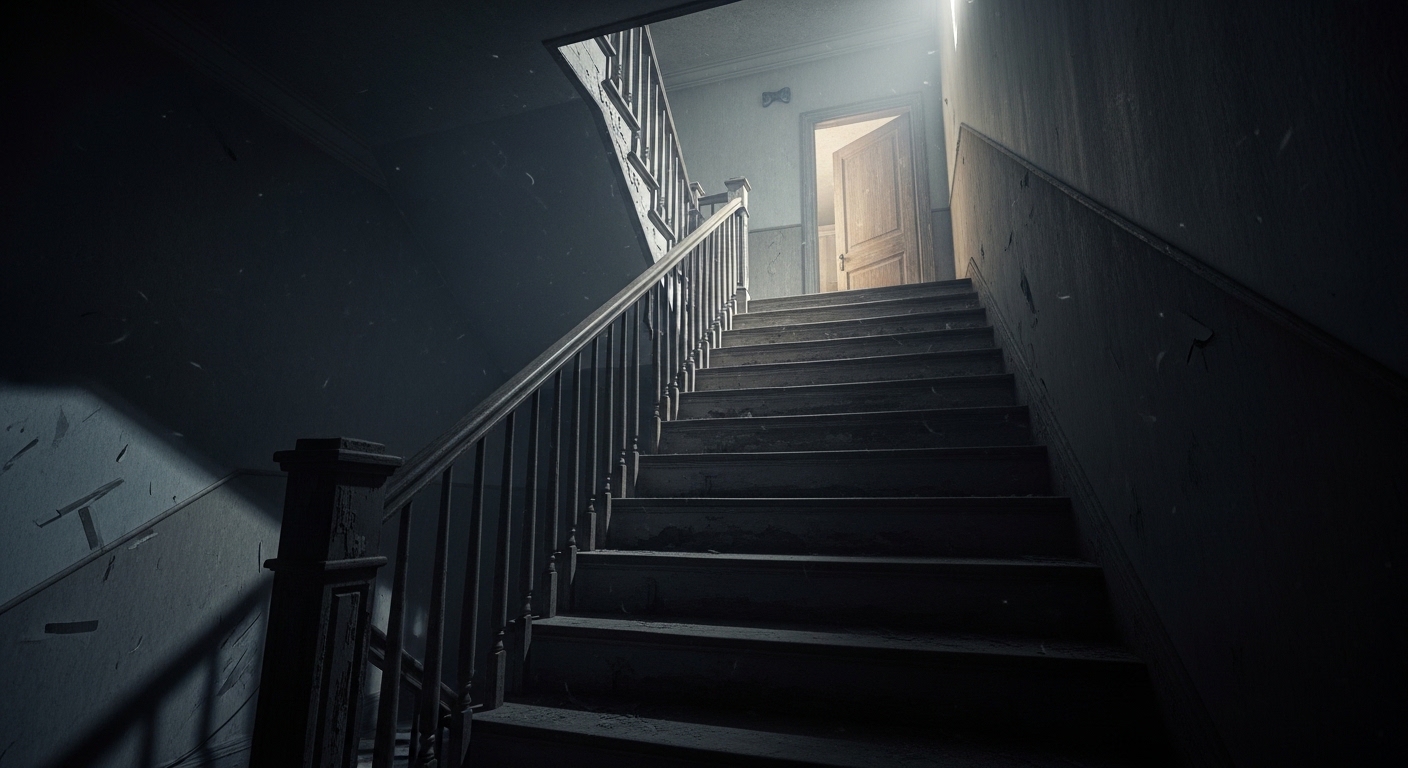
don’t come upstairs documentary immediately pulls viewers into an unsettling space where curiosity and fear collide. don’t come upstairs documentary has gained attention online for its eerie tone, mysterious framing, and the way it plays with psychological tension rather than straightforward storytelling. From the very first moments, it creates a sense that something unseen is always just beyond reach, especially in the idea of a forbidden space “upstairs” that becomes a symbol of fear, memory, and unanswered questions. This documentary has sparked discussion not only for its content but also for the emotional response it triggers in audiences who feel disturbed long after watching it.
Across social platforms, viewers describe it as more than just a documentary experience. It feels like an unfolding psychological puzzle that refuses to fully explain itself. That ambiguity is exactly what makes it so compelling. Instead of delivering clear answers, it invites interpretation, forcing the audience to sit with discomfort and uncertainty. This article explores what makes this documentary so impactful, why it continues to circulate in online conversations, and how its themes connect with deeper human fears.
Table of Contents
ToggleThe unsettling premise that defines don’t come upstairs documentary
At the core of don’t come upstairs documentary lies a simple yet deeply disturbing idea: a place that should not be entered. The phrase “don’t come upstairs” acts like a warning, but it also raises immediate questions. Who is speaking? What is upstairs? And why does it feel dangerous?
Rather than relying on traditional documentary storytelling, it builds tension through implication. Viewers are guided through fragmented narratives, unsettling visuals, and emotional testimonies that never fully align into a single, clear explanation. This intentional lack of clarity creates an atmosphere where imagination fills the gaps, often in far more frightening ways than explicit detail ever could.
The documentary leans heavily on psychological discomfort, using silence, pacing, and repetition to create unease. It suggests that fear does not always come from what is shown, but from what is withheld.
Why the upstairs concept feels universally disturbing
One of the most powerful elements of don’t come upstairs documentary is its use of a familiar domestic setting. Most people associate “upstairs” with bedrooms, storage spaces, or private areas. It represents something personal and slightly hidden, even in ordinary homes.
By turning that everyday concept into something forbidden, the documentary transforms comfort into threat. The upstairs becomes a symbolic threshold between safety and danger, knowledge and ignorance, reality and imagination.
This psychological shift is what makes the documentary resonate so widely. It does not rely on unfamiliar horror environments. Instead, it reimagines a space people already understand, making the fear feel closer and more personal.
Narrative style that avoids easy answers
don’t come upstairs documentary does not follow a conventional linear structure. Instead, it presents fragmented accounts, shifting perspectives, and moments that feel intentionally incomplete. This style encourages viewers to actively interpret what they are seeing rather than passively consuming information.
Some segments feel like personal recollections, while others resemble observational footage or reconstructed memory. The lack of clear categorization creates a blurred boundary between truth and interpretation.
This narrative approach aligns with modern experimental documentary techniques, where emotional truth is prioritized over factual clarity. It forces viewers to question not only what happened, but whether certainty is even possible in the first place.
For readers interested in similar narrative experiments, internal references to psychological documentary storytelling or experimental horror documentaries can provide useful context.
The psychological weight behind silence and suggestion
A major reason don’t come upstairs documentary leaves such a strong impression is its use of silence. Instead of filling every moment with explanation, it allows pauses to linger. These pauses create space for discomfort to grow.
Suggestion becomes more powerful than explanation. A closed door, an unfinished sentence, or an unexplained sound carries more emotional weight than direct exposition. The viewer’s mind naturally tries to complete the narrative, often imagining scenarios more intense than anything explicitly shown.
This technique is closely tied to psychological horror traditions, where fear is built through anticipation rather than resolution. The documentary uses this method to keep viewers emotionally engaged even when nothing overtly “happens.”
Online reaction and cultural ripple effect
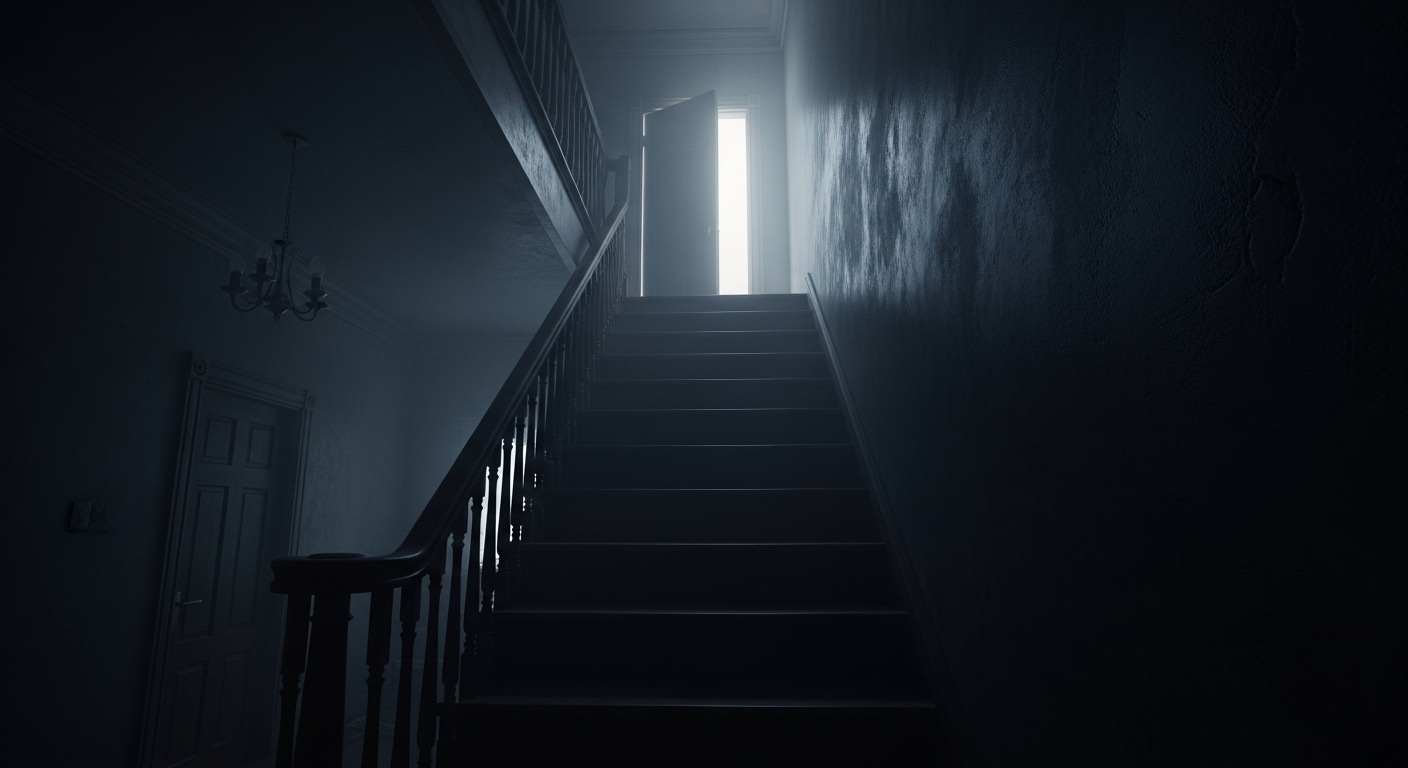
Following its circulation, don’t come upstairs documentary has generated widespread discussion across online communities. Viewers often share theories about its meaning, symbolism, and hidden messages. Some interpret it as a metaphor for trauma, while others see it as a commentary on memory distortion or suppressed experiences.
What makes the response particularly interesting is the diversity of interpretations. There is no single agreed-upon explanation, and that ambiguity fuels continued engagement. People return to rewatch segments, searching for details they might have missed the first time.
This type of engagement reflects a broader trend in modern media consumption, where audiences actively participate in meaning-making rather than accepting fixed narratives.
Symbolism hidden within the documentary’s structure
Beyond its surface tension, don’t come upstairs documentary is often analyzed for its symbolic layering. The “upstairs” space can be interpreted in multiple ways depending on the viewer’s perspective.
For some, it represents memory—something stored away and avoided. For others, it reflects emotional repression or unresolved psychological conflict. The act of being told not to go upstairs becomes a metaphor for avoidance itself.
Even the structure of the documentary reinforces this symbolism. Information is constantly withheld, as if the viewer is being kept downstairs, unable to access the full truth. This structural metaphor strengthens the emotional experience.
Viewer interpretation why ambiguity becomes addictive
Unlike traditional documentaries that aim to inform, don’t come upstairs documentary thrives on uncertainty. This uncertainty becomes part of its appeal.
Viewers often report revisiting it multiple times, not for clarity, but for emotional exploration. Each viewing reveals different interpretations depending on mood, attention, and perspective. The lack of resolution creates a loop of curiosity that keeps the documentary relevant long after the first watch.
This interpretive openness also explains why discussions around it continue to evolve. New theories emerge as viewers compare notes, often finding meaning in details others overlooked.
Production approach and creative direction
While details about the production of don’t come upstairs documentary remain intentionally minimal in public discussion, its style suggests a focus on atmosphere over exposition. The use of minimalistic sound design, restrained visuals, and fragmented storytelling indicates a deliberate effort to prioritize emotional impact.
Rather than guiding the viewer, the documentary seems designed to disorient them slightly, encouraging active participation in meaning-making. This approach is increasingly common in modern experimental filmmaking, especially within psychological and atmospheric genres.
If one were to place it within a broader cinematic context, it aligns more closely with mood-driven documentaries and hybrid narrative experiments than with traditional investigative journalism.
Why it continues to attract attention
The continued popularity of don’t come upstairs documentary can be attributed to its emotional persistence. It does not fade easily from memory because it does not resolve itself cleanly.
Instead, it leaves behind questions that remain active in the viewer’s mind. That unresolved tension becomes part of its identity. In an era where most content is quickly consumed and forgotten, this documentary stands out by refusing closure.
Its impact is not based on shock value alone but on psychological resonance. It taps into universal fears of the unknown, hidden spaces, and unanswered warnings.
Conclusion
don’t come upstairs documentary remains a striking example of how modern storytelling can blur the line between reality and interpretation. It does not rely on answers to create impact. Instead, it builds an experience shaped by tension, silence, and imagination. The result is a documentary that continues to live in the minds of viewers long after the screen goes dark, not because it explains too much, but because it dares to explain too little.
Frequently Asked Questions
1. What is don’t come upstairs documentary about?
don’t come upstairs documentary is widely discussed as a psychological and atmospheric documentary that focuses on tension, ambiguity, and symbolic storytelling. It explores themes of fear, memory, and forbidden spaces, particularly centered around the idea of an “upstairs” area that carries emotional or psychological significance.
2. Why is it called don’t come upstairs documentary?
The title reflects a central warning within the narrative. The phrase “don’t come upstairs” symbolizes restriction, fear, and the idea of hidden truths. It becomes a recurring motif that shapes the viewer’s emotional experience throughout the documentary.
3. Is don’t come upstairs documentary based on a true story?
There is no clear confirmation that it is based on a single true event. Instead, it is often interpreted as a blend of psychological storytelling and symbolic narrative. Its ambiguity is intentional, allowing viewers to form their own conclusions.
4. Why do people find it so disturbing?
The documentary is unsettling because it relies on suggestion rather than explanation. Its use of silence, incomplete narratives, and familiar domestic settings creates psychological discomfort that lingers beyond viewing.
5. What makes it different from other documentaries?
Unlike traditional documentaries that focus on facts and structure, this one emphasizes atmosphere and interpretation. It prioritizes emotional experience over clarity, making it more experimental in style.
6. Where can viewers watch it?
Availability may vary depending on distribution and region. Viewers often encounter discussions or clips online, which contribute to its viral reputation rather than a single official viewing platform.