

A Basic Metabolic Panel (BMP) is one of the most common blood tests doctors order. Yet few patients understand what those eight numbers actually mean for their health. You have probably seen these results on a lab report. Glucose, calcium, sodium, potassium, CO2, chloride, BUN, and creatinine. You may have wondered whether your levels signal something serious. Or simply reflect what you ate for breakfast.
The truth is that a BMP acts like a metabolic snapshot. It captures how your kidneys, blood sugar, and electrolyte balance are performing in real time. Understanding this test empowers you to ask better questions during your next checkup. You can also spot early warning signs before they become serious problems. Let’s break down each component of the basic metabolic panel. You will read your results with confidence by the end of this article.
Why Your Doctor Orders a Basic Metabolic Panel
Physicians rely on the BMP for three main reasons. Routine screening, medication monitoring, and diagnosing acute symptoms. During an annual physical, the basic metabolic panel serves as a baseline. It detects hidden issues like prediabetes or early kidney disease. You often feel no symptoms at these early stages.
If you take common medications like diuretics, ACE inhibitors, or lithium, your doctor will order frequent BMPs. This ensures your electrolytes and kidney function remain stable. The test also plays a critical role in emergency rooms. Patients arrive with confusion, weakness, or irregular heartbeats. Abnormal sodium or potassium levels often explain these alarming symptoms.
Unlike more complex tests, the BMP requires only a single blood draw. It typically returns results within a few hours. This makes it invaluable for both preventive care and urgent decision-making.
The Eight Components of a Basic Metabolic Panel Explained
Each of the eight measurements in a basic metabolic panel tells a specific story. These stories reveal your body’s internal environment. Think of them as individual instruments in an orchestra. When one plays out of tune, the entire system struggles to maintain harmony.
Glucose Your Body’s Instant Energy Currency
Glucose dominates the basic metabolic panel. It reveals how well your body processes sugar. Normal fasting glucose ranges from 70 to 99 mg/dL. Levels between 100 and 125 mg/dL suggest prediabetes. Readings above 126 mg/dL on two separate tests point to diabetes.
However, a single high glucose reading does not automatically mean a chronic condition. Stress can temporarily spike blood sugar. So can a recent meal, certain steroids, or an infection. What makes the BMP particularly useful is the fasting requirement. Most doctors order it as a fasting test. You avoid eating for eight to twelve hours beforehand.
This fasting requirement eliminates the confusing variable of recent food intake. If your glucose falls below 70 mg/dL, you may experience shakiness. Sweating and confusion often follow. This dangerous state is called hypoglycemia. It requires immediate treatment.
Sodium The Master Regulator of Fluid Balance
Sodium controls water distribution throughout your body. It directly impacts blood pressure and nerve function. A basic metabolic panel reports sodium levels between 135 and 145 mEq/L as normal. When sodium drops below 135 mEq/L, you have hyponatremia. You might feel nauseated or confused. Excess water dilutes your blood.
Common causes include drinking too much water without electrolytes. Certain antidepressants or heart failure can also cause it. On the flip side, sodium above 145 mEq/L signals hypernatremia. This usually means dehydration. Your body has lost more water than salt.
Older adults face the highest risk for sodium imbalances. Their thirst sensation diminishes with age. Your basic metabolic panel provides this critical number. Remember that sodium fluctuates throughout the day. Your fluid intake, sweating, and kidney function all play a role.
Potassium The Heart’s Rhythm Keeper
Potassium often concerns doctors more than any other BMP value. Abnormal levels can actually stop your heart. Normal potassium ranges from 3.5 to 5.0 mEq/L. Slight deviations cause noticeable symptoms. Low potassium (hypokalemia) triggers muscle cramps, weakness, and palpitations.
High potassium (hyperkalemia) produces numbness and a slow heartbeat. It can eventually cause cardiac arrest. The BMP detects dangerous potassium shifts caused by kidney disease. Diuretic use is another common cause. Unlike sodium, potassium stays tightly regulated inside your cells.
This explains why rapid changes in potassium produce dramatic symptoms. Vomiting, diarrhea, or medication adjustments can trigger these shifts. Your basic metabolic panel gives doctors lifesaving information within hours. They can intervene immediately when potassium strays too far from normal.
Chloride The Unsung Electrolyte
Chloride often gets overlooked, but this electrolyte works alongside sodium. It helps maintain proper pH balance and digestion. A basic metabolic panel shows normal chloride levels between 96 and 106 mEq/L. Low chloride (hypochloremia) frequently occurs with prolonged vomiting. Taking too many diuretics can also cause it.
High chloride (hyperchloremia) often accompanies dehydration. Kidney dysfunction is another cause. Doctors pay close attention to chloride when patients have metabolic alkalosis or acidosis. These are conditions where blood becomes too basic or too acidic. Severe vomiting removes stomach acid. This causes chloride to drop and blood pH to rise.
Your BMP captures this relationship by showing chloride alongside sodium and CO2. This gives physicians a complete picture of your acid-base status.
CO2 Bicarbonate Your Body’s pH Buffer
Carbon dioxide measured in a basic metabolic panel actually represents bicarbonate. This is your body’s primary alkaline reserve. Normal values range from 23 to 29 mEq/L. Bicarbonate acts like a sponge. It soaks up excess acid to keep your blood pH within a narrow range.
Low CO2 suggests too much acid in your blood. This occurs in diabetic ketoacidosis. Kidney failure or severe diarrhea can also cause it. High CO2 points to metabolic alkalosis from vomiting. Excessive antacid use is another potential cause.
The BMP’s CO2 value also helps diagnose lung problems indirectly. When people retain carbon dioxide from COPD, their kidneys compensate. They hold onto bicarbonate, pushing CO2 levels above normal. Without this basic metabolic panel measurement, doctors might miss these complex adaptations.
BUN Blood Urea Nitrogen Kidney Filter Function
Blood urea nitrogen measures how well your kidneys remove waste. This waste comes from protein breakdown. A basic metabolic panel reports BUN levels between 7 and 20 mg/dL as normal. This range widens with age. High BUN typically signals dehydration, kidney disease, or a high-protein diet.
Low BUN appears in liver disease, malnutrition, or overhydration. What makes BUN particularly useful is how quickly it fluctuates. Drink a liter of water, and your BUN may drop by several points within hours. This sensitivity helps doctors distinguish between dehydration and chronic kidney disease.
If your BUN rises but creatinine stays normal, you likely need more fluids. If both BUN and creatinine climb together, kidney damage becomes the more likely culprit. Your basic metabolic panel provides this distinction within a single blood draw.
Creatinine The Gold Standard for Kidney Health
Creatinine surpasses BUN as the most reliable kidney marker. Muscle produces it at a steady rate. Only kidney filtration removes it. Normal creatinine ranges from 0.6 to 1.2 mg/dL in men. For women, the range is 0.5 to 1.1 mg/dL.
When creatinine creeps upward, your kidneys are not filtering blood efficiently. Even a small rise from 0.9 to 1.3 mg/dL represents a significant drop. That is a 30% loss of kidney function. Unlike BUN, creatinine does not change much with hydration status. This makes it a more stable measurement.
Doctors use the BMP’s creatinine value to calculate eGFR. That stands for estimated glomerular filtration rate. This stages chronic kidney disease from mild (stage 2) to kidney failure (stage 5). If your basic metabolic panel shows rising creatinine, your physician will investigate causes. High blood pressure, diabetes, or medication toxicity are common culprits.
Calcium More Than Just Bones
Calcium in a basic metabolic panel measures total calcium. This is not the free, active form. Normal levels range from 8.5 to 10.2 mg/dL. While most people associate calcium with bone health, this mineral does much more. It controls muscle contractions, nerve transmission, and blood clotting.
High calcium (hypercalcemia) causes kidney stones and confusion. Overactive parathyroid glands are often the cause. Low calcium (hypocalcemia) produces muscle twitching. Heart rhythm problems can also occur.
However, the BMP’s calcium value has an important limitation. About half of total calcium binds to proteins like albumin. Low protein levels can artificially lower calcium readings. For this reason, doctors sometimes order an ionized calcium test when the BMP shows suspicious results.
How to Prepare for a Basic Metabolic Panel
Preparation directly affects whether your BMP results accurately reflect your health. Most physicians require eight to twelve hours of fasting before blood collection. That means no food or drinks except water. Morning appointments work best because you sleep through most of the fasting period.
Certain medications interfere with BMP results. Diuretics, blood pressure drugs, and lithium are common culprits. Never stop prescribed medications without talking to your doctor. Do inform the lab about everything you take. This includes over-the-counter supplements.
Intense exercise within 24 hours before your BMP can temporarily elevate BUN and creatinine. Schedule hard workouts for after your blood draw. Dehydration falsely elevates sodium and BUN. Drink a glass of water the morning of your test unless instructed otherwise.
Interpreting Abnormal BMP Results What Comes Next
Receiving abnormal results on your basic metabolic panel does not mean you have a serious disease. Many abnormalities correct themselves with simple interventions. High BUN and creatinine often return to normal after drinking more water. Low potassium from diarrhea usually responds to potassium-rich foods.
However, persistently abnormal values require further investigation. If your BMP shows consistently elevated glucose, your doctor will order hemoglobin A1c. This diagnoses diabetes. Repeatedly high creatinine triggers a urine albumin test. A kidney ultrasound may follow.
Abnormal sodium or potassium with symptoms like confusion may land you in the hospital. Intravenous correction might be necessary. The basic metabolic panel serves as a triage tool. It tells physicians which direction to look next. It also tells them how urgently they need to act.
Common Conditions Diagnosed Through Basic Metabolic Panels
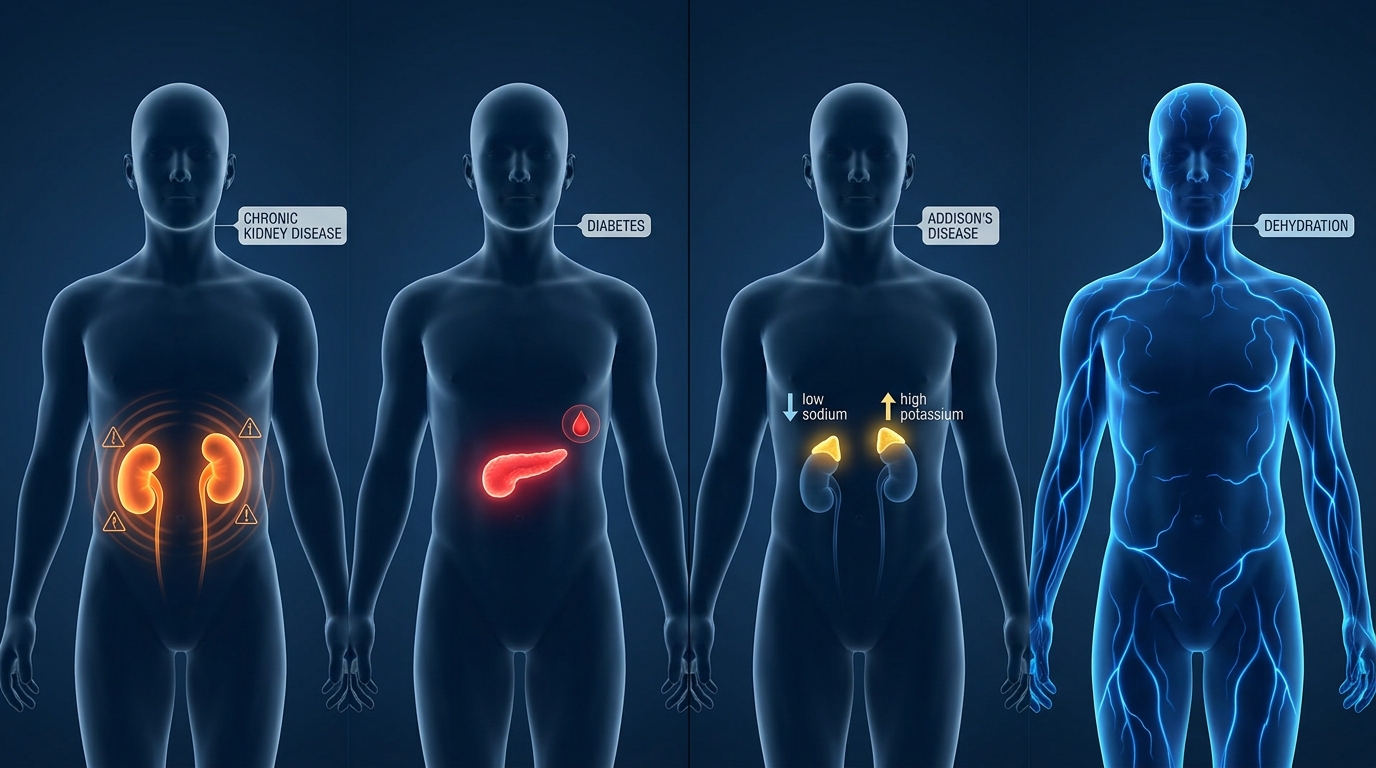
A basic metabolic panel helps diagnose several hidden conditions. Chronic kidney disease often appears first as creeping creatinine elevations. Diabetes announces itself through fasting glucose above 126 mg/dL. This must appear on two separate BMPs.
Electrolyte disorders from adrenal insufficiency produce a distinctive pattern. Low sodium and high potassium together signal Addison’s disease. Dehydration is the most common BMP abnormality. It shows high sodium, high BUN, and normal creatinine.
Acid-base disturbances like diabetic ketoacidosis reveal low CO2 and high glucose. Even eating disorders leave signatures on the BMP. Vomiting causes low chloride and low potassium. Laxative abuse produces low potassium and high CO2. Without the basic metabolic panel, these conditions might be misdiagnosed as anxiety or simple aging.
Basic Metabolic Panel vs. Comprehensive Metabolic Panel
Patients often confuse the basic metabolic panel with the comprehensive metabolic panel (CMP). The BMP includes eight measurements. Glucose, calcium, sodium, potassium, chloride, CO2, BUN, and creatinine. The CMP adds two protein tests. Albumin and total protein. It also adds three liver enzymes. ALP, ALT, and AST.
Your doctor orders a BMP for routine monitoring. This includes kidney function, electrolytes, and blood sugar. You receive a CMP when liver disease is suspected. Or when you take medications that affect the liver. The CMP costs slightly more but provides additional information.
For most routine monitoring, the basic metabolic panel offers sufficient data. If your BMP reveals something suspicious, your physician can always order the remaining CMP components later.
Lifestyle Factors That Skew Your Basic Metabolic Panel
Your daily habits profoundly influence basic metabolic panel results. A high-protein diet elevates BUN. This makes dehydration seem worse than it actually is. Heavy alcohol consumption within 48 hours of testing lowers glucose. It also elevates CO2.
Smoking temporarily raises glucose and sodium. Even standing instead of lying down before blood collection can increase certain values. Fluid shifts cause these changes. Medications like NSAIDs (ibuprofen, naproxen) raise creatinine and potassium.
Licorice candy contains a compound that lowers potassium dangerously. If your basic metabolic panel comes back abnormal, review your recent diet. Look at your medications and activities before panicking. Repeat testing after correcting these variables often produces normal results.
Frequency of BMP Testing Based on Health Status
How often you need a basic metabolic panel depends on your health. Healthy adults under 50 with no chronic diseases need a BMP every two to three years. Adults over 50 should receive annual BMPs. Kidney function declines naturally with age.
Patients with diabetes, hypertension, or chronic kidney disease require BMPs every three to six months. If you take diuretics, ACE inhibitors, or lithium, expect a BMP every three months. Hospitalized patients may receive daily BMPs during acute illness.
Your doctor determines the right interval based on your stability. Never hesitate to ask why a BMP was ordered. Ask what specific information they hope to gain.
Pediatric Basic Metabolic Panels Special Considerations
Children require the same basic metabolic panel as adults. However, normal ranges differ significantly by age. Newborns have higher potassium, up to 6.0 mEq/L. They have lower calcium, down to 7.5 mg/dL. Infants also have higher BUN, up to 20 mg/dL. Their kidneys are still maturing.
Dehydration in children produces the same BMP pattern as adults. High sodium, high BUN, normal creatinine. But it progresses faster. Children have less fluid reserve. Pediatricians order BMPs for vomiting lasting more than 24 hours. Also for poor weight gain or excessive thirst.
Understanding age-specific reference ranges prevents misdiagnosis. If your child’s BMP shows results outside adult ranges, ask your pediatrician. Request the appropriate pediatric reference values.
When Your Basic Metabolic Panel Warrants Emergency Attention
Certain basic metabolic panel results demand immediate medical intervention. Potassium below 2.5 mEq/L or above 6.5 mEq/L can cause fatal heart arrhythmias. Sodium below 120 mEq/L risks seizures. Brain swelling becomes a real danger. Sodium above 155 mEq/L carries the same risks.
Glucose below 50 mg/dL or above 500 mg/dL indicates severe metabolic derangement. Creatinine above 4.0 mg/dL suggests advanced kidney failure. These critical values trigger automatic calls from labs to your doctor. Do not ignore a basic metabolic panel showing these numbers.
Even if you feel fine, electrolyte disturbances can progress quickly. They can go from asymptomatic to life-threatening within hours. Mild abnormalities near normal ranges rarely require emergency care. These often resolve with outpatient follow-up and simple lifestyle adjustments.
Medications That Alter Basic Metabolic Panel Results
Dozens of common medications distort basic metabolic panel results. Diuretics cause the most frequent abnormalities. Furosemide and hydrochlorothiazide lower potassium and sodium. They raise calcium and glucose. ACE inhibitors and ARBs raise potassium. They lower blood pressure.
Lithium consistently elevates BUN. It can cause dangerous potassium shifts. Steroids like prednisone raise glucose and lower calcium. Laxatives lower potassium and chloride when used frequently. NSAIDs raise creatinine and potassium. They can hide true kidney function.
Always bring a complete medication list when reviewing your basic metabolic panel. Include doses and frequencies. Your doctor may adjust medications. Or they may repeat the BMP after changes to distinguish drug effects from true disease.
Conclusion
That single tube of blood drawn during your last checkup contains more actionable health information than most people realize. The basic metabolic panel translates complex kidney function into eight clear numbers. Electrolyte balance and blood sugar regulation also appear in these results. These guide everything from daily water intake to life-saving medication adjustments.
Learning to read these results transforms you from a passive patient into an engaged partner. You now understand why your doctor asks about fasting before blood work. You know how dehydration masquerades as kidney disease. Keep a copy of your results. Track changes over time. Ask questions when numbers drift.
FAQs
1. How long does it take to get basic metabolic panel results?
Most labs process BMP results within four to eight hours of blood collection. Hospital-based labs often return results in one to two hours for emergency patients. Your doctor typically receives electronic results immediately after processing. You may wait one to three days if testing occurs at an outpatient lab that batches samples. Many patient portals now release BMP results automatically.
2. Do I really need to fast before a basic metabolic panel?
Fasting is essential for accurate glucose interpretation. It is less critical for electrolytes and kidney markers. If you eat before a BMP, your glucose may rise temporarily. This could trigger a false diabetes concern. Most doctors order the BMP as a fasting test specifically to obtain reliable glucose data. Always confirm fasting requirements with your doctor’s office before the test.
3. Can I drink water before a basic metabolic panel?
Yes, drinking water before a BMP is not only allowed but encouraged. Water prevents dehydration, which falsely elevates sodium, BUN, and creatinine. Avoid sugary, caffeinated, or flavored beverages. They can affect glucose and electrolyte measurements. Plain water in reasonable amounts will not alter your results. It also makes blood collection easier.
4. What happens if my basic metabolic panel shows high creatinine?
High creatinine on one BMP warrants repeat testing within two weeks. If creatinine remains elevated, your doctor will order a urine albumin-to-creatinine ratio. They will calculate your eGFR. Temporary causes include dehydration, high-protein meals, and intense exercise. Persistent elevation requires investigation for chronic kidney disease. Early-stage kidney disease responds well to treatment, so do not panic.
5. Why is my basic metabolic panel normal but I still feel sick?
A normal BMP rules out certain metabolic emergencies. It cannot detect infections, inflammation, or hormonal disorders. If your symptoms persist despite normal results, your doctor will order additional tests. A complete blood count or thyroid panel may be next. The BMP answers specific questions about kidneys, electrolytes, and blood sugar. It does not cover every possible health concern.
6. How accurate is the basic metabolic panel?
The BMP achieves high accuracy when properly collected and processed. However, false results occur. Hemolyzed samples artificially raise potassium. Prolonged tourniquet use falsely elevates protein-bound substances. Delayed processing allows cells to consume glucose. These lab errors happen in fewer than 2% of BMPs. Suspicious results warrant repeat testing before making major treatment decisions.
7. Does pregnancy affect basic metabolic panel results?
Pregnancy significantly alters normal BMP ranges. Glucose normally runs lower in pregnant women, 60 to 90 mg/dL. This is due to fetal consumption. BUN and creatinine decrease because pregnancy increases kidney filtration by 50%. Standard non-pregnant reference ranges do not apply during pregnancy. Obstetricians use trimester-specific normal values for interpretation.