
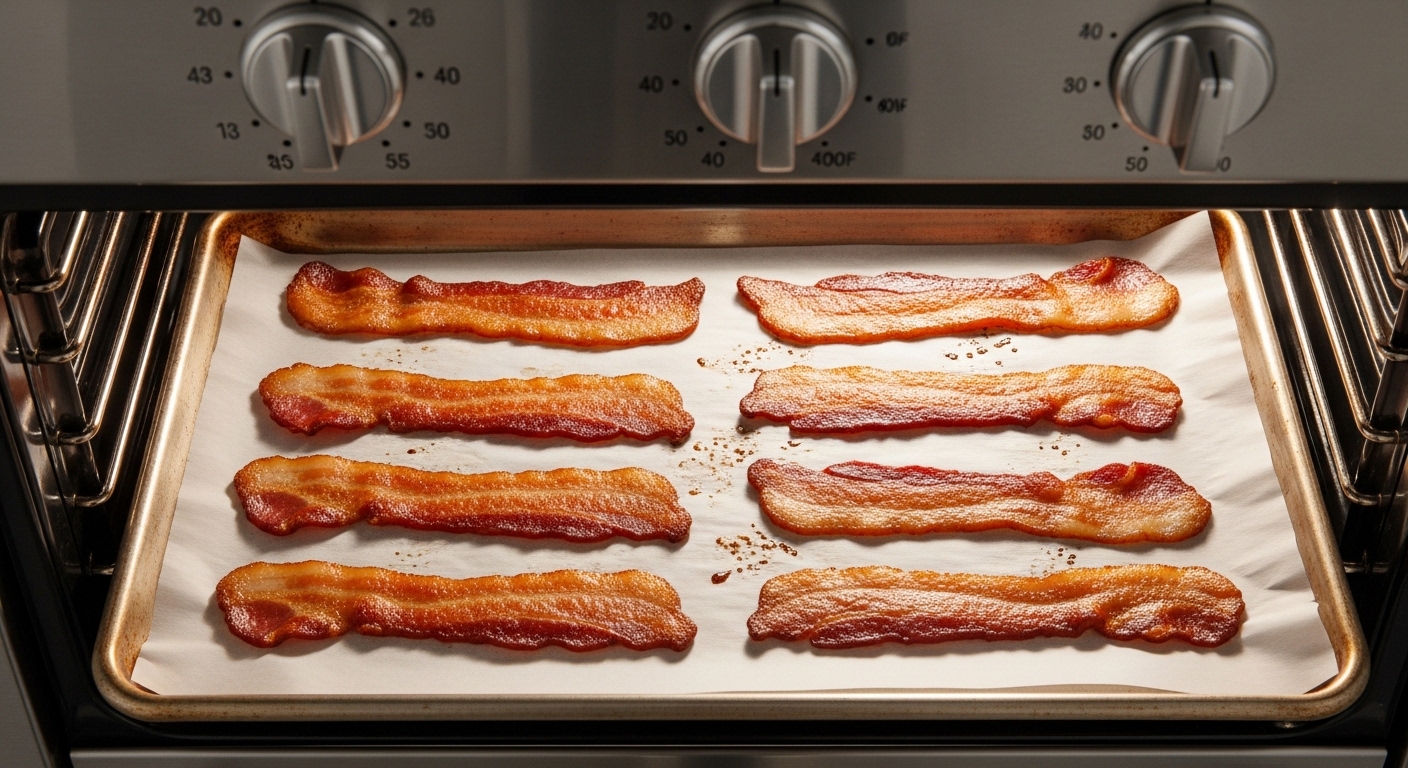
Cook bacon in oven, and you will never go back to standing over a sputtering stovetop pan.
That greasy mess, the uneven strips, the constant flipping—it belongs in the past.
When you cook bacon in oven, you unlock consistently crisp, flat, and beautifully caramelized results with almost no hands-on time.
You simply arrange the strips on a baking sheet, slide them into the oven, and wait for the magic to happen.
Whether you need a single batch for breakfast sandwiches or multiple pounds for a family brunch, learning to cook bacon in oven scales effortlessly.
Professional chefs rely on this method for good reason: even heat surrounds every strip, rendering fat perfectly while preserving that coveted smoky flavor.
No more curled edges or burnt centers. No more splattered grease on your stovetop or arms.
Once you cook bacon in oven, you get perfect bacon, batch after batch, with minimal cleanup.
Let’s walk through every detail so you master this technique from the very first try.
Why You Should Cook Bacon in Oven Instead of on the Stovetop
Frying bacon in a pan creates hot spots. The direct contact with metal means some areas burn while others remain chewy.
You also crowd the pan to speed things up, which steams the bacon instead of crisping it. Steam ruins texture.
It turns your breakfast into a limp, sad affair. When you cook bacon in oven, you eliminate those uneven hot zones.
Radiant heat from above and below cooks each strip uniformly. The bacon lies flat, so fat renders out slowly, leaving behind a delicate, shatteringly crisp bite.
You also reclaim your stovetop burners for eggs, pancakes, or home fries. Multi-tasking becomes effortless.
Imagine frying eggs while you cook bacon in oven—that’s real kitchen efficiency.
The Ideal Oven Temperature to Cook Bacon in Oven
Set your oven to 400°F (200°C). This temperature strikes the perfect balance between speed and gentle rendering when you cook bacon in oven.
Lower temperatures, like 350°F, produce chewy bacon with less browning. Higher temperatures, such as 425°F, risk burning the edges before the fat fully renders.
At 400°F, you achieve golden-brown crispiness in roughly 15 to 20 minutes, depending on thickness.
Thin-cut bacon might finish in 12 minutes, while thick-cut can take up to 25.
Always preheat your oven completely before you cook bacon in oven. A cold oven causes uneven cooking and extends the time, which dries out the meat.
Choosing the Right Baking Sheet to Cook Bacon in Oven
Select a heavy-gauge, rimmed baking sheet when you cook bacon in oven. Dark nonstick sheets absorb more heat, so reduce your cooking time by a few minutes if you use one.
Light-colored aluminum sheets reflect heat and cook more evenly. Line the sheet with parchment paper or aluminum foil.
Parchment paper prevents sticking and makes cleanup effortless—just toss the paper after you cook bacon in oven. Foil works too, but bacon might stick slightly.
If you use foil, crumple it first, then flatten it. Those tiny ridges elevate the bacon slightly, allowing fat to drip underneath and promoting extra crispiness.
Avoid using wire racks on the baking sheet. While some recommend racks for fat drainage, they actually prevent the bacon from frying in its own fat, which reduces flavor and browning.
Let the bacon sit directly on the lined sheet.
Arranging Bacon Strips for Maximum Crispiness
Lay bacon strips in a single layer with no overlapping. Overlapping creates steamed sections that refuse to crisp.
Leave a small gap between each strip—about ¼ inch. The fat renders and spreads slightly during cooking, so those gaps prevent strips from fusing together.
For standard 12×16 baking sheets, you can fit about 10 to 12 strips of regular-cut bacon. If you need more, use two sheets and rotate them halfway through cooking.
Place thicker ends of strips toward the center of the sheet, as the center tends to run slightly hotter.
This small adjustment ensures those meaty ends cook through every time you cook bacon in oven.
The Cold Oven Trick When You Cook Bacon in Oven
Some cooks swear by placing bacon in a cold oven and then turning on the heat. This technique renders fat more slowly at the start, resulting in exceptionally flat strips with minimal curling.
Try it if you prefer restaurant-style flat bacon. Place your arranged baking sheet in the oven, set the temperature to 400°F, and start your timer once the oven reaches that temperature.
The total time increases by about 3 to 5 minutes compared to preheating first. The trade-off is worth it for picture-perfect bacon on sandwiches or burgers.
This variation of how to cook bacon in oven delivers the flattest possible results.
How to Tell When Your Bacon Is Done
Visual cues matter more than timers. Perfect oven-baked bacon transitions from pink and white to deep mahogany brown around the edges. The fat turns golden and appears bubbly.
For chewy bacon with some flexibility, pull it when the center remains slightly soft but edges show brown.
For crispy bacon that shatters when bent, wait until the entire strip appears dark brown and the fat looks opaque and rigid.
Keep in mind that bacon continues cooking for a minute after you remove it from the oven due to residual heat. Pull it just before it reaches your desired doneness.
Test a strip by lifting it with tongs—crispy bacon holds straight out without drooping.
Once you learn to cook bacon in oven this way, you will nail the perfect texture every time.
Draining and Blotting for the Best Texture
Transfer baked bacon immediately to a paper towel-lined plate. The paper towels absorb excess surface fat, which keeps the bacon from tasting greasy.
Pat the tops with another paper towel for extra dryness. For large batches, place a wire rack over a baking sheet, transfer the bacon to the rack, and keep it in a warm oven (200°F) while you cook subsequent batches.
This method allows air to circulate around every strip, preserving crispiness for up to an hour.
Proper draining completes the process when you cook bacon in oven.
Saving and Using Bacon Grease Like a Pro
Pour the rendered bacon fat from your baking sheet into a heat-safe container. Strain it through a fine-mesh sieve or coffee filter to remove burnt bits.
That liquid gold stores in the refrigerator for months. Use it to fry eggs, roast potatoes, sauté vegetables, or make salad dressings.
One sheet pan of bacon typically yields 3 to 5 tablespoons of fat. Never pour hot grease down your sink—it solidifies and clogs pipes.
Let it cool slightly, then transfer to a jar. If you lined your sheet with foil, simply let the fat cool in the foil, then fold the edges to create a pouch and throw it away.
This bonus perk makes it even more rewarding to cook bacon in oven.
Cooking Different Types of Bacon in the Oven
Thick-cut bacon requires a lower temperature and longer time. Bake thick slices at 375°F for 20 to 25 minutes.
The extra thickness needs gentler heat to render all that internal fat without burning the outside. Turkey bacon cooks faster and at a higher temperature—400°F for 10 to 12 minutes, but watch closely because it goes from done to burnt quickly.
Center-cut bacon contains less fat, so reduce your time to 10 to 15 minutes at 400°F.
Maple or brown sugar-coated bacon needs a watchful eye because sugar burns faster. Lower the temperature to 350°F and bake for 18 to 22 minutes, checking frequently.
No matter which variety you choose, you can cook bacon in oven successfully with these adjustments.
Seasoning Bacon Before Baking for Next Level Flavor
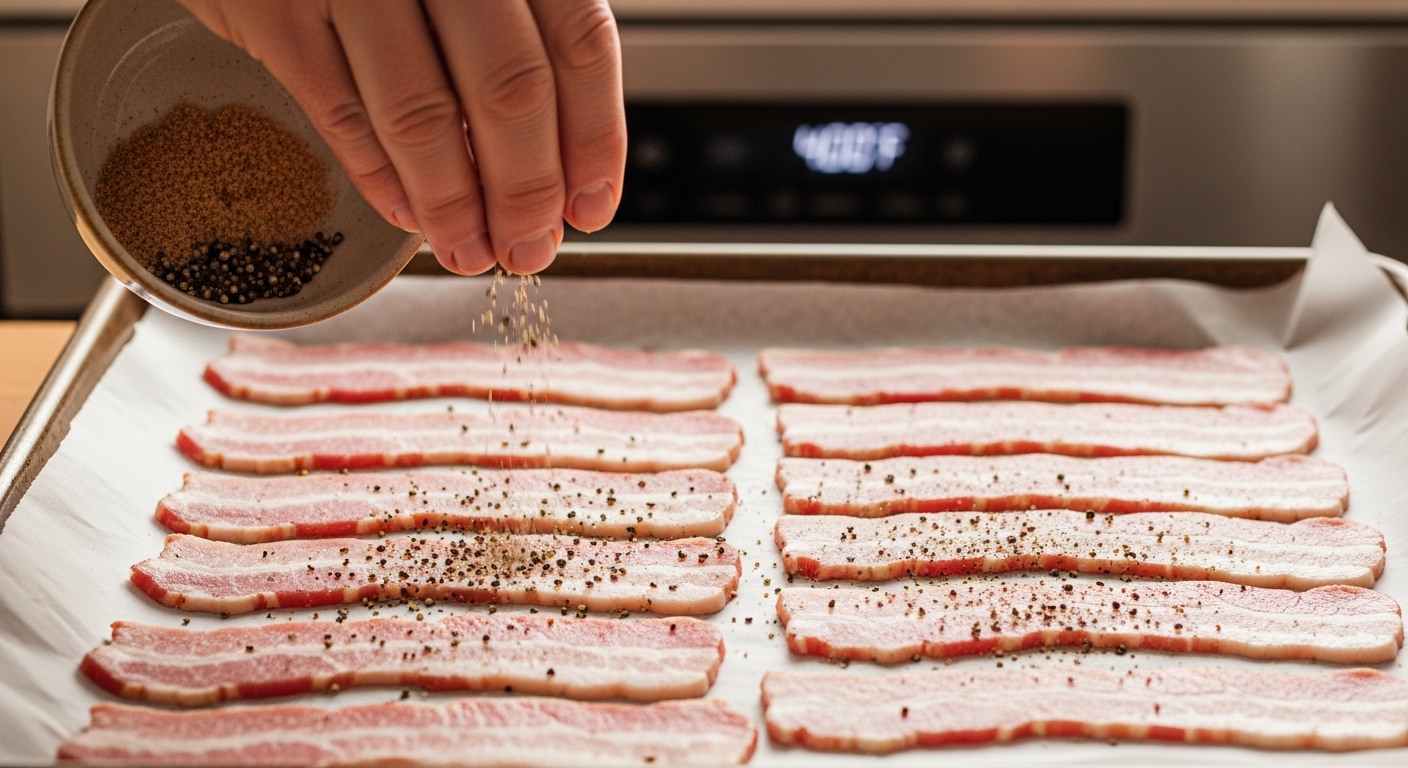
Plain bacon tastes wonderful, but a sprinkle of seasonings transforms it. Black pepper adds subtle heat. Smoked paprika amplifies the smoky notes.
A light dusting of brown sugar creates candied bacon—brush the strips with maple syrup first for sticky sweetness. Crushed red pepper flakes deliver spice.
Freshly cracked black pepper and finely minced rosemary give an herby, savory kick. Apply seasonings before baking so they adhere and toast in the oven.
For wet glazes like honey or maple syrup, brush them on during the last 3 minutes of cooking to prevent burning.
Seasoning elevates the final result when you cook bacon in oven.
Making Large Batches for Meal Prep
Cooking bacon in the oven excels for meal prep. Bake three or four sheets simultaneously if your oven accommodates them.
Rotate sheets top to bottom and front to back halfway through for even cooking. Cool the bacon completely, then layer strips between paper towels inside an airtight container.
Refrigerate for up to five days or freeze for three months. Reheat refrigerated bacon in a 350°F oven for 3 to 5 minutes or in a microwave for 20 to 30 seconds.
Frozen bacon reheats directly from frozen add 1 to 2 minutes to the microwave time. Pre-cooked bacon crumbles also freeze beautifully.
Crumble cooled bacon into small pieces, freeze on a parchment-lined sheet, then transfer to a bag.
When you need breakfast for a crowd, you will be grateful you learned to cook bacon in oven.
Common Mistakes That Ruin Oven Bacon
Overcrowding the baking sheet creates steamed, flabby bacon. Always use multiple sheets if needed.
Using glass baking dishes instead of metal sheets leads to uneven browning because glass heats slowly and retains heat poorly.
Skipping parchment paper turns cleanup into a nightmare—baked-on bacon grease resists scrubbing. Opening the oven door repeatedly releases heat and extends cooking time.
Trust your timer and peek through the oven window. Cutting bacon strips before baking makes them curl aggressively and cook unevenly.
Always slice bacon after cooking for clean edges. Avoid these pitfalls every time you cook bacon in oven.
Creative Ways to Use Your Oven Baked Bacon
Perfect bacon enhances more than breakfast plates. Crumble it over baked potatoes with sour cream and chives.
Layer strips into BLTs with heirloom tomatoes and butter lettuce. Chop bacon into macaroni and cheese for smoky depth.
Wrap it around scallops or chicken tenders before baking—the oven method pre-cooks the bacon just enough to become crispy without burning.
Stir crumbled bacon into cornbread batter. Sprinkle it over roasted Brussels sprouts or green beans.
Add bacon bits to Caesar salad for a salty crunch. Even desserts benefit: candied bacon tops vanilla ice cream or chocolate brownies.
Once you cook bacon in oven regularly, you will find countless uses for it.
Adjusting Recipes for Convection Ovens
Convection ovens circulate hot air, which speeds cooking and increases crispiness. Reduce your oven temperature by 25°F when using the convection setting.
Bake regular-cut bacon at 375°F for 12 to 15 minutes. Check for doneness earlier than your recipe states because convection dries food faster.
Position the baking sheet on the lower rack to prevent the fan from blowing bacon grease around the oven cavity.
If you notice greasy splatters on the oven walls after convection baking, switch to the regular bake setting next time.
These small tweaks help you cook bacon in oven perfectly regardless of your oven type.
Storing Leftover Baked Bacon the Right Way
Never wrap warm bacon directly in plastic condensation forms and turns it rubbery. Cool strips completely on a wire rack until they reach room temperature.
Layer them between paper towels inside a zip-top bag, pressing out excess air. Refrigerate for up to five days.
For longer storage, vacuum-seal cooled bacon in portion-sized bags and freeze. Vacuum sealing prevents freezer burn and preserves that fresh-cooked texture.
When you need bacon for a recipe, grab a bag and reheat directly. No thawing required for crumbled bacon used in cooking.
Proper storage ensures your effort to cook bacon in oven pays off all week long.
How Oven Bacon Improves Breakfast Sandwiches
Flat, uniformly cooked bacon fits perfectly on breakfast sandwiches. Stovetop bacon curls into awkward shapes that slide off English muffins or biscuits.
Oven-baked bacon lays flat, providing complete coverage from edge to edge. Build your sandwich by toasting the bread, adding a fried egg, a slice of melted cheese, and two flat bacon strips.
The bacon’s crispness contrasts with the soft egg yolk. For meal-prep breakfast sandwiches, assemble them completely, wrap individually in foil, and freeze.
Reheat in a 350°F oven for 15 minutes directly from frozen. This is one of the best reasons to cook bacon in oven.
Comparing Oven Bacon to Air Fryer and Microwave Methods
Air fryers produce crispy bacon quickly but in small batches—most models hold only four or five strips. The circulating air also blows light bacon strips around the basket.
Microwaves cook bacon in minutes but create uneven textures with rubbery spots and rock-hard edges. Neither method matches the oven’s capacity or consistency.
Ovens handle two pounds of bacon simultaneously while you focus on other dishes. The texture also surpasses both alternatives: oven bacon shatters, while microwave bacon often bends and tears.
Stick with the oven for any batch larger than four strips. When you cook bacon in oven, you get superior results every time.
Cleaning Your Baking Sheet After Cooking Bacon
Let the baking sheet cool completely before cleaning. If you used parchment paper, simply peel it off and discard. Any residual grease wipes away with hot soapy water.
For foil-lined sheets, roll the foil into a tight ball and throw it away. Without lining, sprinkle baking soda over the greasy pan, add a few drops of dish soap, and scrub with a non-abrasive sponge.
Baked-on grease softens when you fill the pan with hot water and a dryer sheet; let it soak for an hour. The dryer sheet’s fabric softeners break down grease bonds for effortless scrubbing.
Easy cleanup is another hidden benefit when you cook bacon in oven.
Conclusion
Oven-baked bacon solves every frustration of stovetop frying. You get consistently perfect strips, a cleaner kitchen, and free hands to prepare the rest of the meal.
Once you master how to cook bacon in oven with the 400°F method and parchment-lined sheets, you will wonder why you ever cooked bacon any other way.
That first bite of shatteringly crisp, deeply savory bacon straight from the oven makes every second of waiting worthwhile.
FAQs
1. Can I cook bacon in oven without parchment paper?
Yes, you can place bacon directly on a clean baking sheet when you cook bacon in oven. The bacon releases naturally as it cooks because the fat renders underneath. However, cleanup becomes more difficult because baked grease sticks to the metal. For easier scrubbing, line the sheet with aluminum foil instead of parchment. Foil allows direct contact while simplifying cleanup just crumple and discard the foil after the fat solidifies.
2. How long does it take to cook bacon in oven at 400°F?
Regular-cut bacon typically takes 15 to 20 minutes when you cook bacon in oven at 400°F. Thin-cut bacon finishes in 10 to 14 minutes. Thick-cut slices require 20 to 25 minutes. Always check visually rather than relying solely on timers because oven temperatures and bacon thicknesses vary. Start checking around the 12-minute mark for thin bacon or 15 minutes for regular cuts to avoid burning.
3. Should I flip bacon when I cook bacon in oven?
Flipping is unnecessary when you cook bacon in oven because the ambient heat surrounds every strip evenly. Both sides cook simultaneously without direct contact with a hot surface. Flipping actually disrupts the rendering process and can tear delicate strips. Leave the bacon untouched from the moment you put the sheet in until you remove it from the oven.
4. Can I cook bacon in oven at 350°F instead of 400°F?
Baking at 350°F produces chewier bacon with less browning. The lower temperature renders fat more slowly, which can lead to greasy strips. Increase the cooking time to 20 to 30 minutes if you cook bacon in oven at 350°F. Use this temperature only if you prefer soft, pliable bacon for wrapping around other foods or for recipes that require parcooked bacon.
5. Why is my bacon burning on the edges but still raw in the middle when I cook bacon in oven?
This usually happens because your oven runs hotter than the set temperature. Use an oven thermometer to verify accuracy. Alternatively, your baking sheet might be too dark, absorbing excessive heat. Switch to a light-colored aluminum sheet. Lastly, thick-cut bacon needs a lower temperature reduce to 375°F and extend the time to allow the center to cook before edges burn when you cook bacon in oven.