
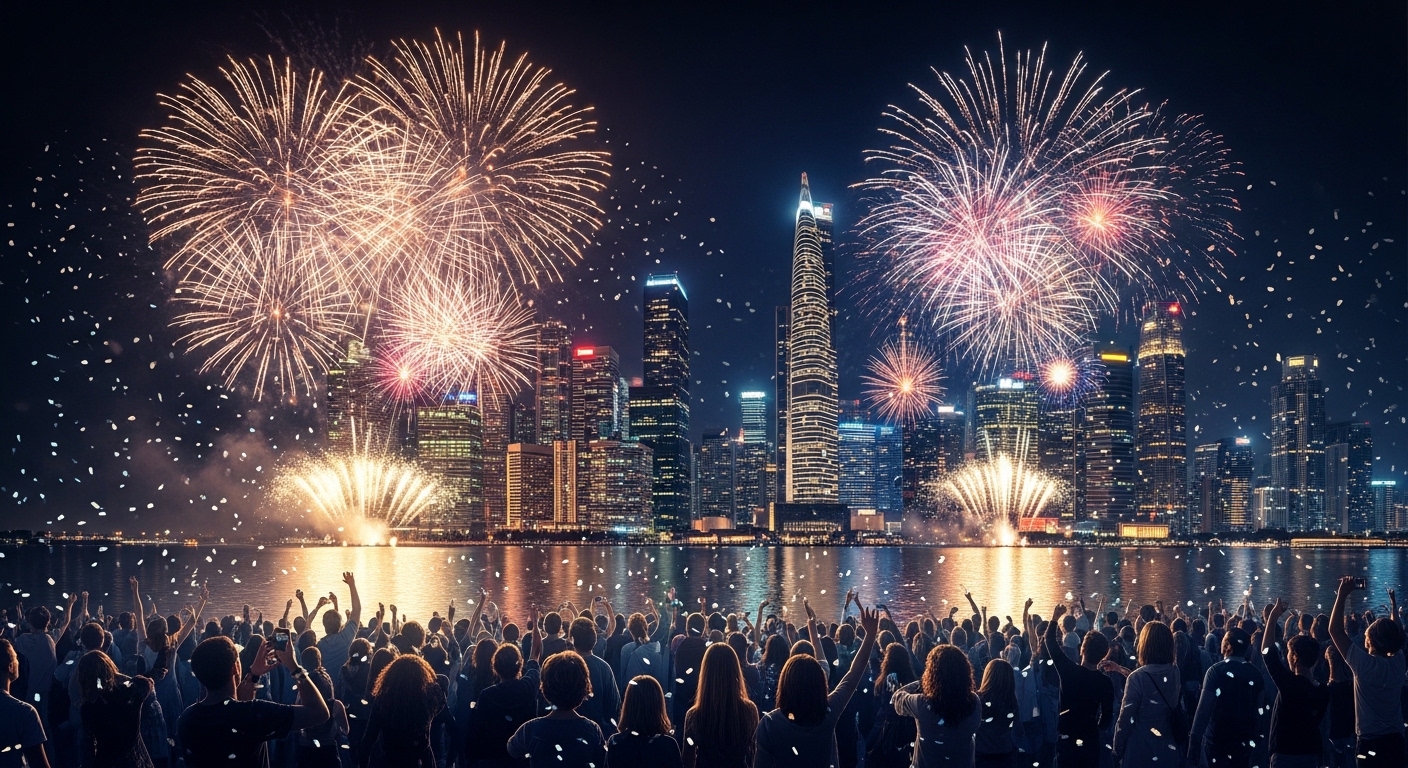
New Year’s Eve arrives with an unmistakable energy that quietly builds across the world before exploding into one of the most emotionally charged nights of the year. New Year’s Eve brings together strangers, families, and entire cities under a shared sense of anticipation, reflection, and excitement for what lies ahead. It is a moment when time feels heavier than usual, when every passing second carries meaning, and when people collectively pause to acknowledge both endings and beginnings. Across continents, cultures celebrate this night differently, yet the emotional foundation remains the same: gratitude for the past and hope for the future. Whether it unfolds in a crowded metropolis, a quiet coastal town, or within the warmth of home, New Year’s Eve becomes a symbolic threshold that marks the transition from what was to what can be.
This night is not simply a date on the calendar; it is a global emotional event. People reflect on personal victories and losses, reconnect with loved ones, and set intentions that often shape their mindset for months ahead. The lights, fireworks, music, and gatherings all contribute to an atmosphere that feels almost cinematic. For many, New Year’s Eve represents renewal in its purest form, where the past is acknowledged but not held onto, and the future is welcomed with open arms.
Table of Contents
ToggleThe Emotional Pulse That Makes New Year’s Eve Universally Powerful
New Year’s Eve carries a unique emotional rhythm that resonates across cultures and languages. Unlike other celebrations tied to religion or nationality, this night belongs to everyone simultaneously. It is one of the few global experiences where millions of people share the same countdown, the same anticipation, and the same symbolic moment of transition.
The emotional intensity often begins long before midnight. In the days leading up to New Year’s Eve, people naturally become reflective. They think about relationships that shaped them, goals they achieved or missed, and moments that defined their year. This reflection creates a mental bridge between the past and the future, making the final night of the year feel deeply meaningful.
As the evening progresses, excitement begins to replace reflection. Social gatherings increase, cities become brighter, and an unspoken sense of unity spreads through crowds. Even those who do not typically engage in celebrations often find themselves drawn into the atmosphere, as if the world itself is collectively preparing for change.
How Cities Around the World Turn Into Living Stages
One of the most fascinating aspects of New Year’s Eve is how cities transform into immersive celebrations of light, sound, and emotion. Each major location brings its own identity to the night, creating a global tapestry of traditions and visual spectacles.
In the United States, New York City becomes the epicenter of global attention. At the heart of it all, Times Square turns into a sea of people gathered beneath glowing billboards and flashing lights. The iconic countdown and ball drop in Times Square, part of Times Square Ball Drop, draws millions of viewers worldwide and symbolizes one of the most recognizable New Year’s traditions on Earth. Confetti fills the air, music echoes through the streets, and the entire city pulses with collective excitement.
On the other side of the world, Sydney celebrates earlier due to its time zone advantage, but with no less intensity. Sydney Harbour becomes a glowing masterpiece as fireworks reflect across the water, illuminating landmarks like the Sydney Opera House. The celebration is not just a display; it is a visual storytelling of light and reflection that sets the tone for global festivities.
Meanwhile, Dubai takes New Year’s Eve into the realm of architectural wonder. Skyscrapers, including the Burj Khalifa, become part of the fireworks choreography, blending modern engineering with artistic spectacle. The result is a futuristic celebration that feels both grand and meticulously crafted.
In Europe, London offers a more atmospheric celebration along the River Thames. Fireworks launched near the London Eye reflect across the water, creating a serene yet powerful visual experience that combines history and modern celebration in one scene.
Each of these cities demonstrates how New Year’s Eve adapts to cultural identity while maintaining a shared emotional core.
The Countdown A Psychological Journey in Seconds
The countdown to midnight is one of the most emotionally charged sequences in human celebration. It is not just about marking time; it is about compressing a year’s worth of emotions into a final moment of awareness.
As the numbers decrease, people often experience a mix of nostalgia and anticipation. Memories of the past year surface naturally, sometimes unexpectedly. At the same time, the future feels closer than ever, almost tangible.
When the countdown reaches its final ten seconds, collective energy peaks. Voices rise, hearts race, and attention becomes fully present. At zero, the transition is complete. The past year officially ends, and a new one begins instantly.
This moment is powerful because it is shared globally in waves across time zones. As one region celebrates midnight, another is still counting down, creating a continuous chain of celebration that circles the planet.
Traditions That Give New Year’s Eve Its Cultural Depth
While fireworks and parties dominate the visual narrative, New Year’s Eve is deeply enriched by traditions that vary widely across regions and families.
Many people focus on setting resolutions. These intentions often represent personal transformation goals such as improving health, strengthening relationships, or pursuing new ambitions. Even though resolutions may evolve over time, the act of setting them creates a psychological commitment to growth.
In several cultures, symbolic foods are consumed to attract prosperity and good fortune. These traditions often carry historical meaning passed down through generations, reinforcing the connection between past and present.
Music also plays a central role. From celebratory anthems to nostalgic tracks that reflect on the year gone by, music shapes emotional flow throughout the night. It helps transition people from reflection to celebration and finally to joy at midnight.
Another common tradition involves gathering with loved ones. Whether in large parties or intimate settings, shared presence amplifies emotional connection. Even simple conversations become meaningful during this time because they are framed by the significance of the night.
New Year’s Eve as a Moment of Personal Reflection

Beyond public celebrations, New Year’s Eve is often a deeply personal experience. Many individuals use this night to reflect on their journey over the past twelve months.
This reflection is not always structured or intentional. Sometimes it happens quietly, during a walk, a conversation, or a moment of stillness. People think about the challenges they overcame, the lessons they learned, and the relationships that shaped their emotional landscape.
This process often leads to clarity. It allows individuals to recognize patterns in their behavior, appreciate growth they may have overlooked, and acknowledge areas where change is needed.
The emotional impact of this reflection can extend far beyond the night itself. It often influences decisions, mindset, and motivation in the early months of the new year.
The Role of Food Music and Social Connection
Food is one of the most important elements of New Year’s Eve celebrations. Shared meals symbolize unity and abundance. Families often prepare special dishes that carry emotional or cultural significance, turning dining into a ritual of togetherness.
Music, meanwhile, acts as the emotional engine of the night. It builds anticipation before midnight and sustains energy afterward. Playlists often include a mix of nostalgic songs, celebratory tracks, and culturally significant music that reflects the identity of the group celebrating.
Social connection is the foundation of the entire experience. Whether through physical gatherings or virtual communication, people feel a strong desire to connect with others during this time. Even brief interactions carry heightened emotional weight because of the significance of the moment.
The Midnight Transition When the World Feels Different
Midnight on New Year’s Eve feels different from any other moment in the year. It is not just a change of date; it is a symbolic reset that affects emotional perception.
Fireworks explode across skylines, cheers fill the air, and people embrace one another in celebration. The world feels briefly united in a shared experience of joy and renewal.
In that moment, time seems to pause emotionally even as it continues physically. It is a reminder that life moves forward constantly, but human experience can still find meaning in transitions.
Why New Year’s Eve Feels Like a Global Reset Button
New Year’s Eve functions as a psychological reset point for individuals and communities alike. It provides structure for reflection and motivation for change.
Even those who do not actively set resolutions often feel a subtle shift in mindset. There is an unspoken understanding that the new year represents opportunity. This belief is powerful because it influences behavior, decision-making, and emotional outlook.
The global nature of the celebration reinforces this effect. Knowing that millions of others are also reflecting and restarting at the same time creates a sense of shared momentum.
The Quiet Side of New Year’s Eve
While much attention is given to large celebrations, there is also a quieter side to New Year’s Eve. Many people spend the night in solitude or in small, intimate settings.
For some, this quietness is intentional. It allows space for deeper reflection without distraction. For others, it may be a result of circumstance. Yet even in silence, the emotional significance of the night remains present.
This quieter experience often includes personal rituals such as journaling, watching reflections of the year, or simply thinking about future goals. It demonstrates that New Year’s Eve is not defined by scale but by meaning.
The First Moments of the New Year
The hours immediately following midnight carry a distinct emotional tone. There is a sense of freshness, optimism, and possibility. Even though nothing has physically changed, perception shifts significantly.
People often greet one another with renewed warmth. Conversations turn hopeful, and plans for the future begin to take shape. The night feels suspended between celebration and anticipation of what comes next.
Conclusion
New Year’s Eve remains one of the most emotionally significant nights in human experience because it connects people through time, culture, and shared hope. It is a reminder that endings are not final but transitional, and every moment carries the possibility of renewal. As the world moves from one year to the next, the night continues to inspire reflection, joy, and connection, making it far more than just a celebration it becomes a global symbol of beginning again.
Frequently Asked Questions
1. What makes New Year’s Eve so special worldwide?
New Year’s Eve is special because it is a global moment of transition. People everywhere experience the same countdown and emotional shift, creating a shared sense of unity and renewal.
2. Why do people celebrate New Year’s Eve with fireworks?
Fireworks symbolize excitement, transformation, and celebration. Their bright and dramatic display enhances the emotional impact of midnight and marks the beginning of the new year.
3. How do people typically spend New Year’s Eve?
People spend New Year’s Eve in many ways, including attending parties, watching fireworks, having family dinners, traveling, or reflecting quietly at home.
4. What is the meaning of New Year’s resolutions?
New Year’s resolutions represent personal goals set at the start of the year. They symbolize intention, self-improvement, and hope for positive change.
5. Why does New Year’s Eve feel emotional?
It feels emotional because it combines reflection on the past year with anticipation for the future. This duality creates a powerful psychological and emotional experience.